
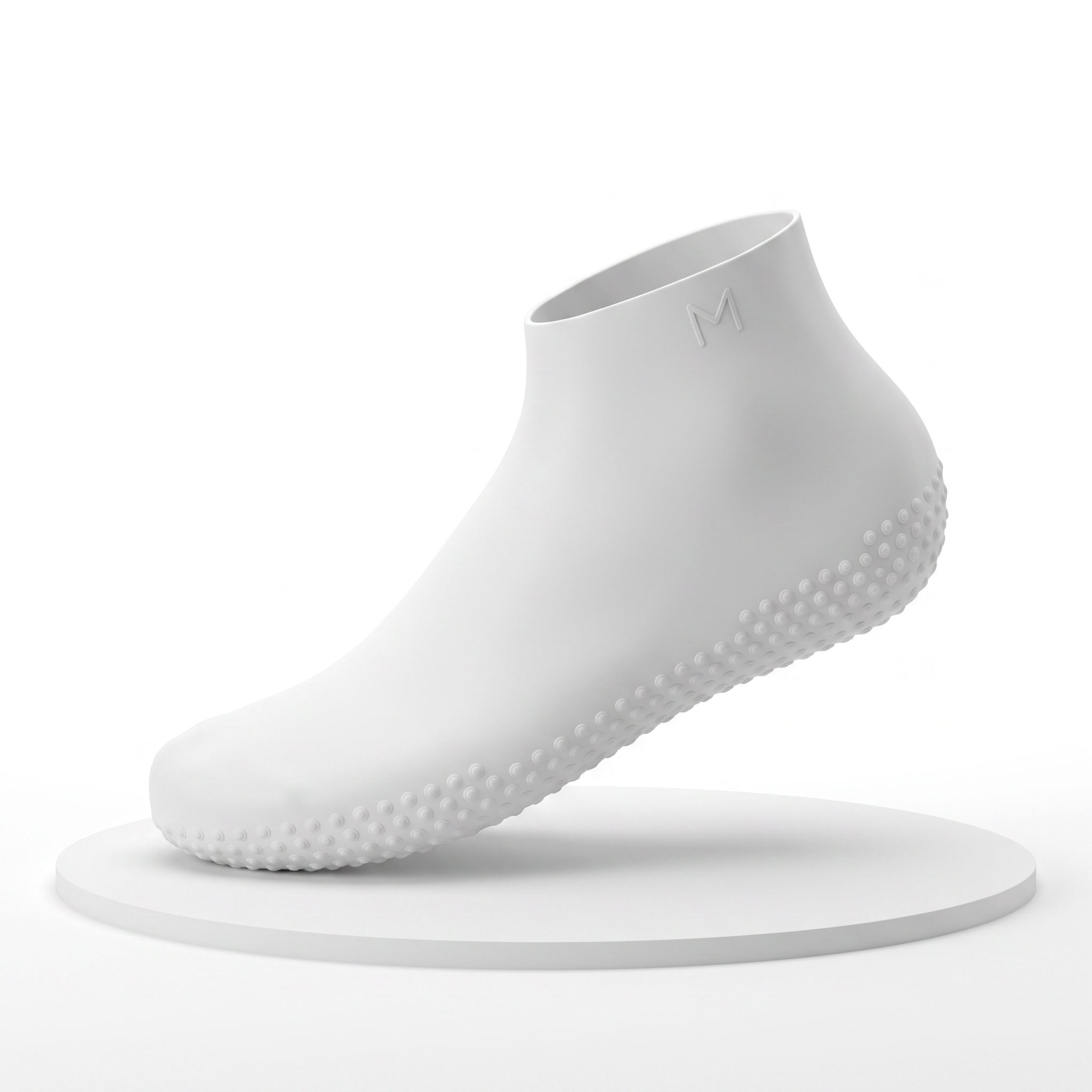
The reusable alternative
Reusable foot covers that lock moisture in — not just once
Most foot masks on the shelf are built for one wear. Molosoc's cover is built for hundreds.
Meet the Foot CoverThe alternative
Disposable sock masks vs. reusable foot covers
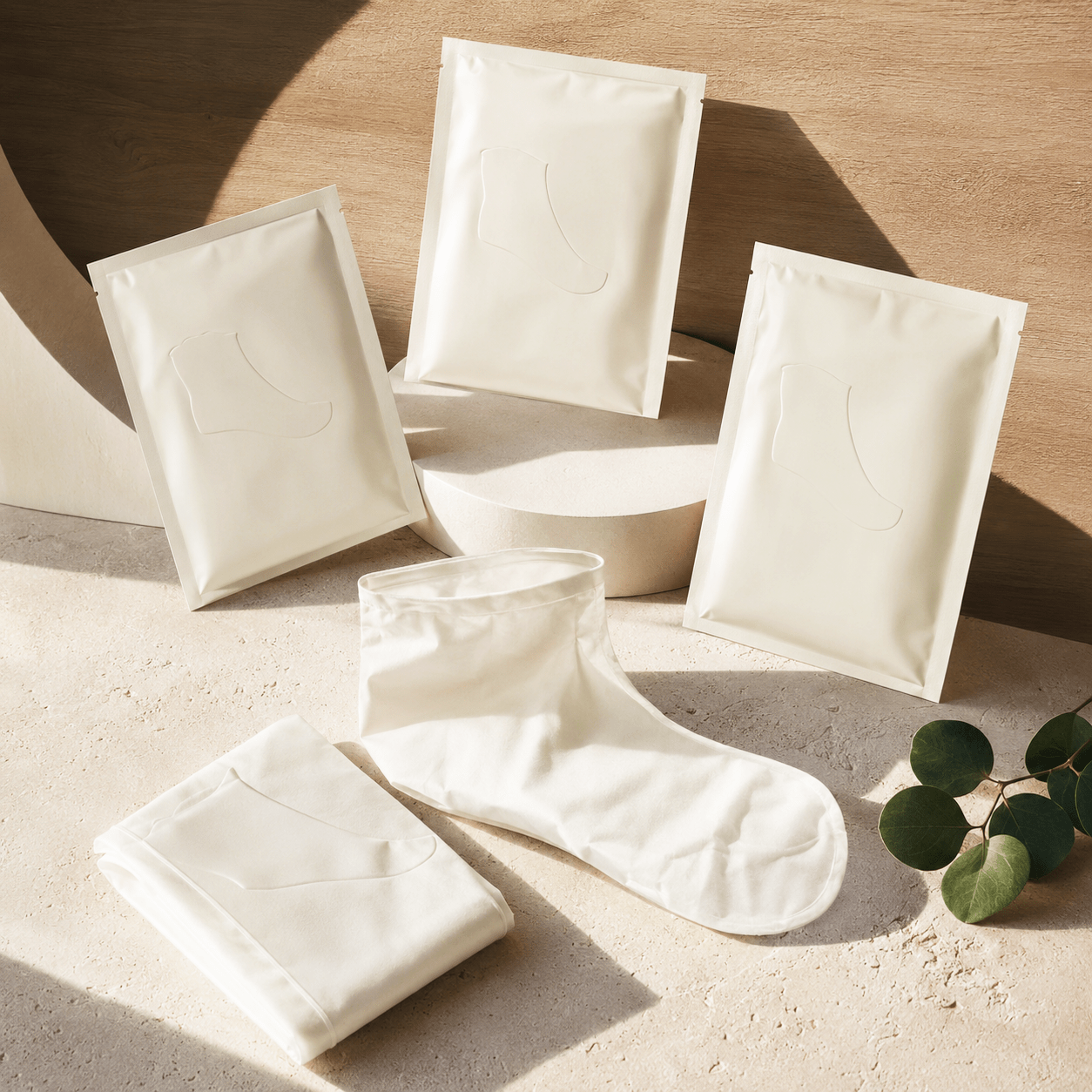
What's actually inside a single-use sock mask
A pre-filled sock mask comes pre-loaded with its own formula — you use it once, and both the formula and the sock go in the bin together. Convenient for a single night, but the formula is fixed and the cost resets every time.
Why reusable changes the math
A reusable cover separates the two things a disposable mask bundles together: the cover itself, and the cream inside it. Wash it, refill it with whatever you're already using, and use it again — the cost of a single session drops instead of repeating every time.
One cover, any cream — not locked to a pre-filled formula
A disposable mask locks you into whatever formula it shipped with. Molosoc doesn't — it works with the cream already in your drawer, whether that's a drugstore balm or something you paid more for. The cover does the locking-in; the cream is entirely your choice.
The mechanism
What "moisture-lock" actually means
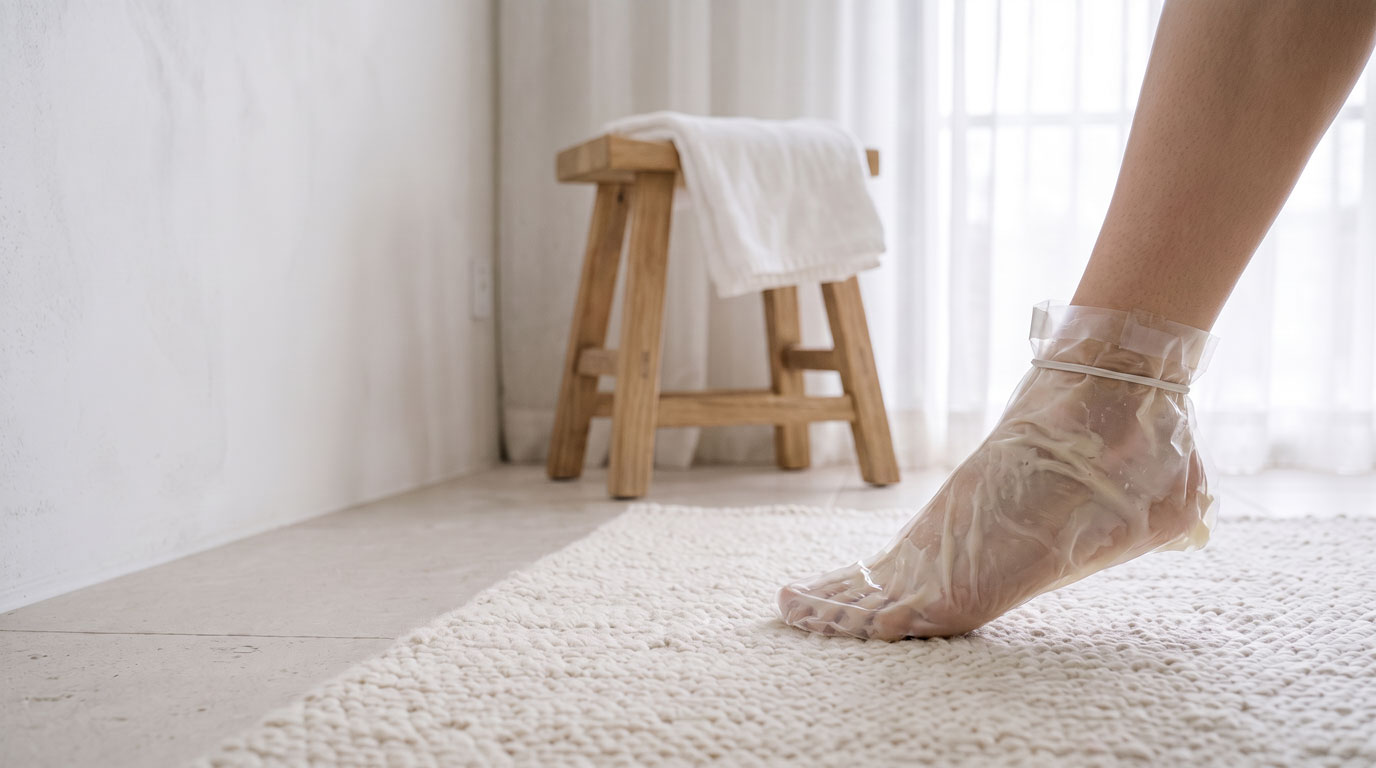
How the seal traps moisture against skin
Cream applied and left open to air starts losing its effect within minutes — most of it ends up on socks or sheets before it's absorbed. A moisture-lock cover seals the cream directly against skin for the length of the session, so more of it actually goes in instead of rubbing off.
Why mess and slipping usually kill the routine
The most common reason a foot cream routine stops isn't the cream — it's the mess. Slippery floors, greasy sheets, and a sock that won't stay put make people quietly stop reaching for it. A sealed cover removes that friction, which is usually the actual reason routines don't survive past the first week.
Cream-agnostic, by design
Molosoc isn't formulated to work with one specific cream — it's designed to work with whichever one you already trust. That's a deliberate choice: the goal isn't to sell a new formula, it's to make the one you already own finally do its job.
The real cost
Reusable vs. disposable: the real cost
Cost per use over a month
Using a twice-weekly routine as an example: a Molosoc cover costs €10 and holds up for at least 10 uses — so across a month of regular use (roughly 8 sessions), that €10 covers the entire month, working out to under €1.50 per session. A disposable sock mask, priced $6–10, is a new purchase every single time — the same 8 sessions cost $48–80 in disposables alone.
Cost per use over a year
Stretched across a year at the same twice-weekly pace (roughly 96 sessions), a Molosoc cover — replaced every 10 uses at €10 each — comes to around €100 for the year. The same 96 sessions in disposable masks, at $6–10 each, adds up to $576–960. The gap isn't a marketing number — it's the same €10 cover, reused instead of rebought.
What you're not paying for anymore (salon touch-ups)
A salon pedicure fades within days to a couple of weeks. Maintaining that result at home with a €10 reusable cover costs a fraction of what a single repeat salon visit runs — the saving isn't just the cover versus the mask, it's the trips you stop needing to book.
Who this is for
Who this is for
Already have a cream you love
If there's already a cream in your routine that you trust, this is how you make it actually work the way it was supposed to.
Just had a pedicure and want it to last
A fresh pedicure starts fading almost immediately. A reusable cover is how you stretch that result without booking another appointment.
Buying this for someone else
For someone who's always on her feet, or who never quite gets around to taking care of her own — this is the easiest way to give her a routine that actually sticks.
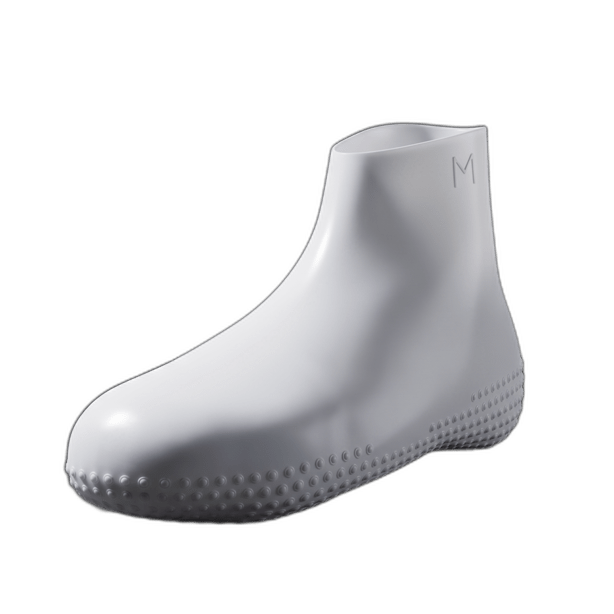
Molosoc
See the reusable cover for yourself
Real before/after results, the full mechanism, and what's actually in the box.
Meet the Foot Cover