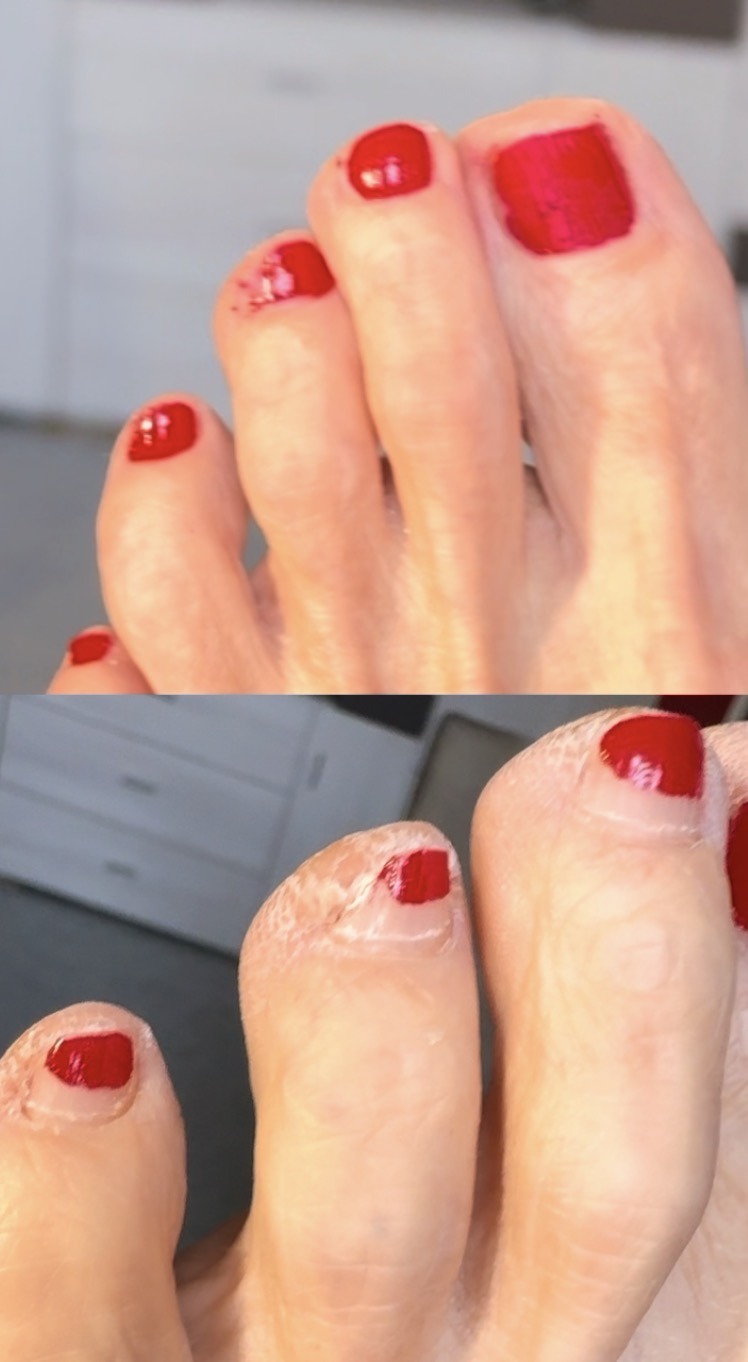
Signs of infection to take seriously
Increasing redness, warmth, swelling, or discharge around the nail are signs that go beyond what home care alone typically resolves.

Ingrown toenails treatment
Most ingrown toenails respond well to consistent at-home care — softening the skin, relieving pressure, and giving the nail room to grow out properly.
Step by step

Softening the skin around the nail is the first real step, since firm, dry skin is what the nail edge is fighting against as it grows.
A warm soak softens skin and eases discomfort in the moment, but it doesn't change the underlying pressure — it's preparation for the steps that actually help, not a fix on its own.
Once the surrounding skin is softer and the pressure point is addressed, the nail has room to grow past the skin instead of into it, which is when actual improvement starts.
For good, not just for now
An approach that holds up combines consistent softening with a genuine change to whatever's been causing the pressure — shoes, trim, or both — rather than treating a single episode in isolation.
Resolving the current episode addresses the symptom; preventing the next one requires the underlying cause — nail shape, footwear, trim habit — to actually change.
Trimming straight across, rather than rounding the corners, gives the nail edge a straighter path to grow along instead of curving back into the skin.
When to get help
When home treatment isn't enough
Increasing redness, warmth, swelling, or discharge around the nail are signs that go beyond what home care alone typically resolves.
Increasing redness, warmth, swelling, or discharge around the nail are signs that go beyond what home care alone typically resolves.
If symptoms are worsening after several days of consistent home care, or if there's any sign of infection, it's time to see a podiatrist rather than continuing to self-treat.
The longer irritated skin stays under pressure, the more inflamed and harder to treat it becomes — which is why early, consistent care matters more than an aggressive fix later.
Part of a bigger picture
See the real results
Time-stamped before/after results from real, consistent care.
See real results, no filters