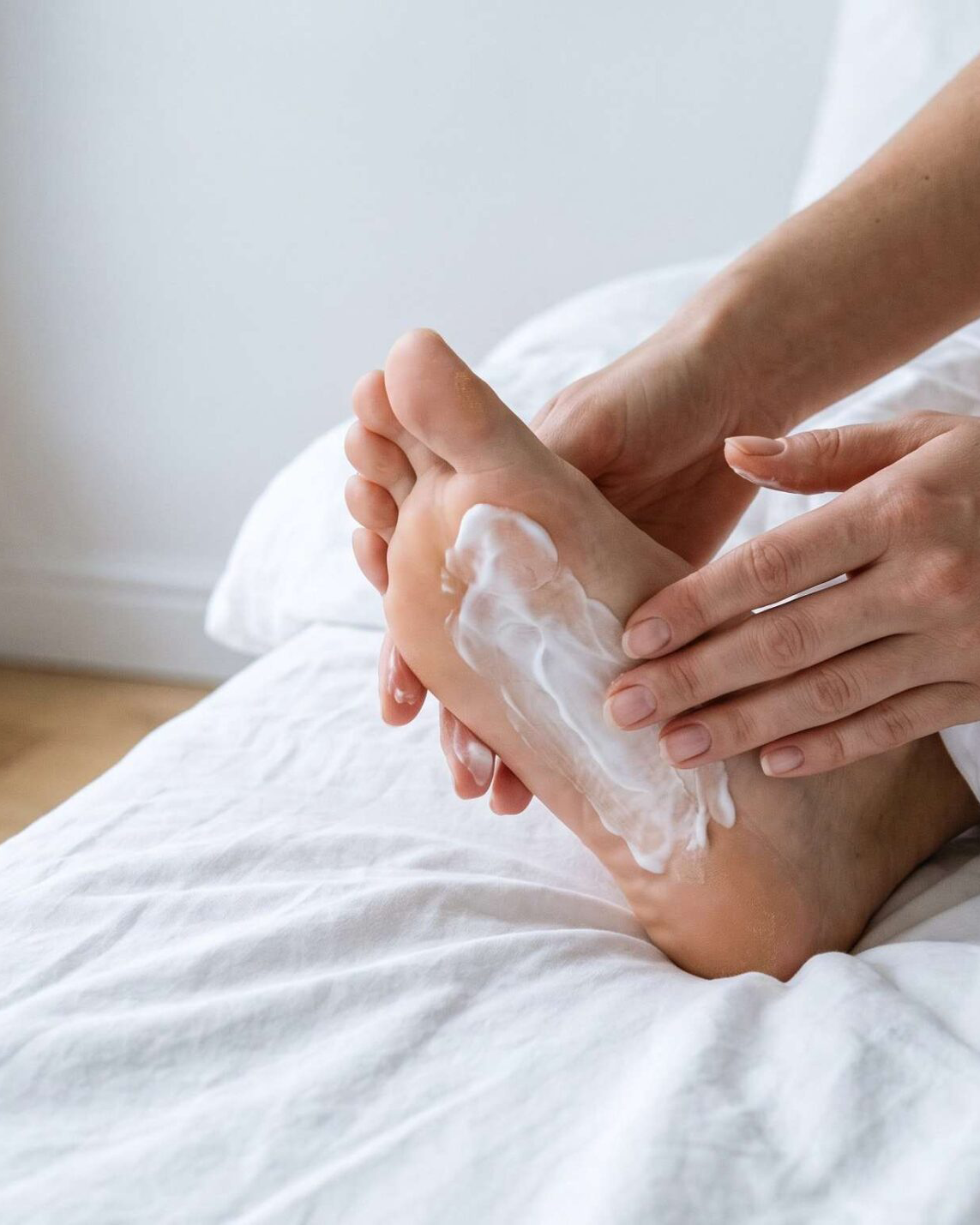
The routine most people already try
Most people already own a cream and already apply it somewhat regularly — the routine itself isn't the gap.

Cracked heels cream
A cracked-heel cream doesn't fail because of the formula nearly as often as it fails because of the routine around it — ingredients matter less than whether the cream gets a real chance to absorb.
What actually matters

Urea and similar humectants draw moisture into skin and help soften thickened areas, which is why they show up often in creams aimed at cracked heels specifically.
Thicker balms sit on skin longer and suit more severe cracking, while lighter lotions absorb faster and work well for everyday maintenance once the worst of it has healed.
A well-formulated cream applied inconsistently underperforms a simpler one used every day with enough contact time to actually absorb.
Severity, not brand
The "best" cream depends far more on how severe the cracking is than on which brand made it — a mild case and a deep, painful crack call for different levels of intervention, not different logos.
Price doesn't reliably predict how well a cream performs on cracked heels — plenty of inexpensive formulas contain the same core humectants as premium ones.
If there's already a foot cream in the drawer, it's very likely capable of doing the job — the missing piece is usually consistency and contact time, not a better product.
It's not the cream
Why a good cream still doesn't fix cracked heels
Cream applied and left uncovered rubs off on socks or floors within minutes, long before it's had time to actually absorb into cracked, thickened skin.
Most people already own a cream and already apply it somewhat regularly — the routine itself isn't the gap.
Cream applied and left uncovered rubs off on socks or floors within minutes, long before it's had time to actually absorb into cracked, thickened skin.
Cream needs sustained, sealed contact with skin to work — not a stronger formula, just enough uninterrupted time for it to actually absorb.
Part of a bigger picture
The cream you already own
This is exactly what Molosoc is built for — sealing whatever cream you already trust against your skin long enough to actually work.
See how it works