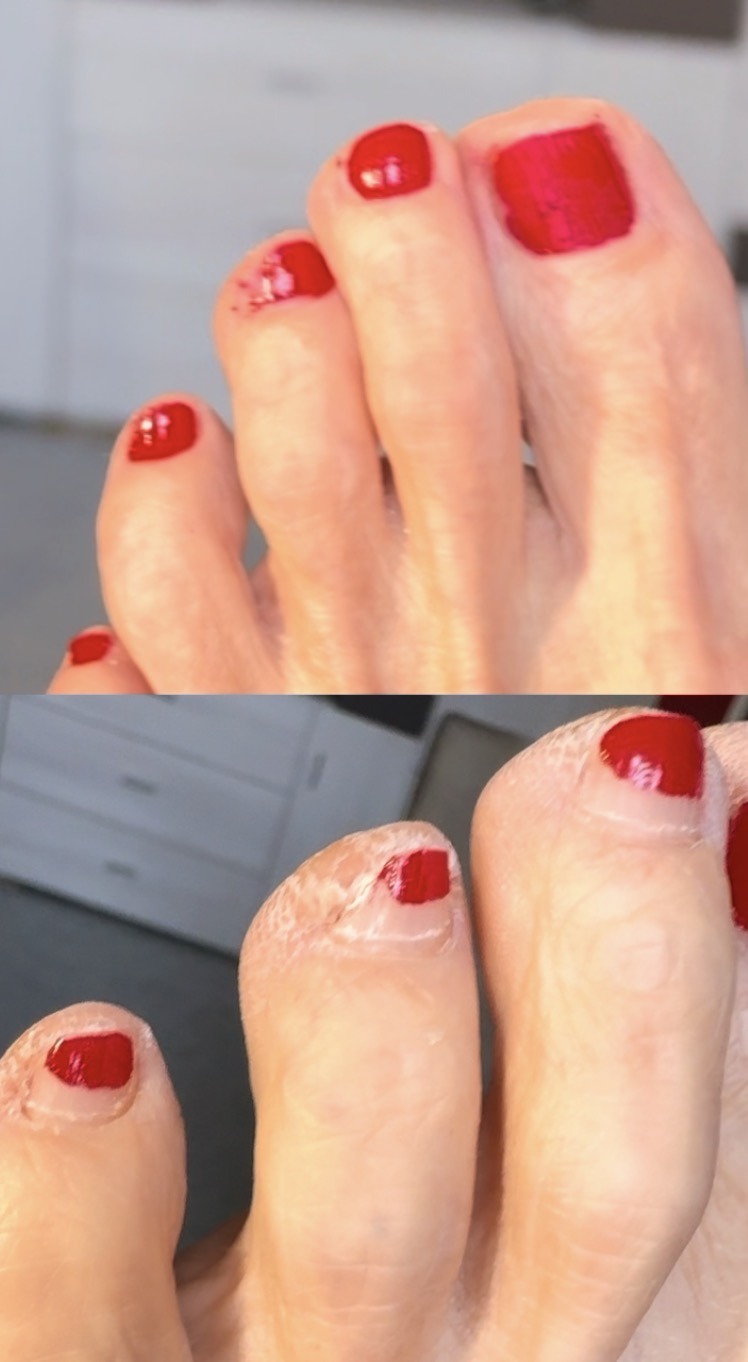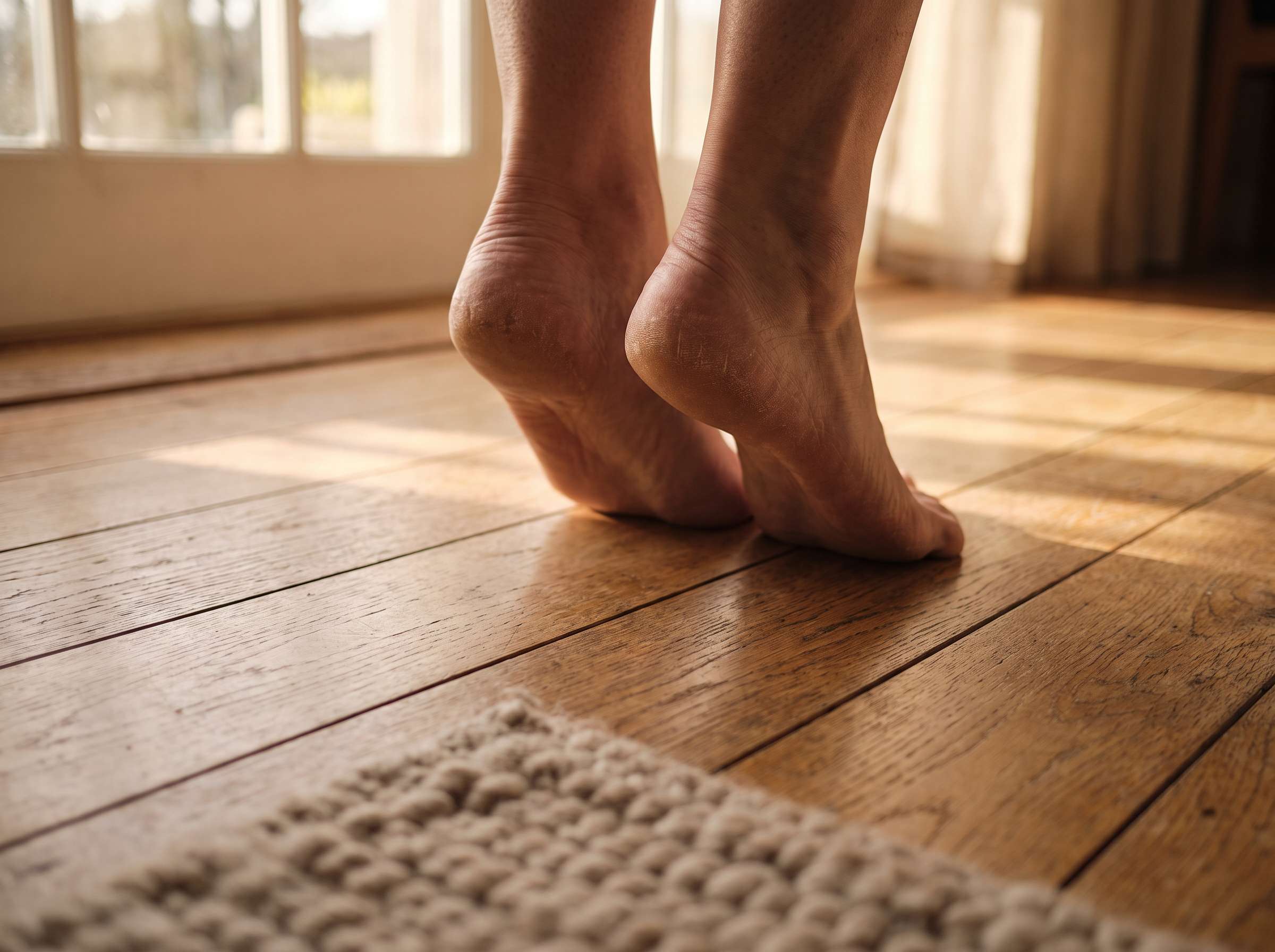
The routine most people already try
Most people already own a foot cream and already apply it — the routine itself was never the problem.

Cracked heels
Cracked heels happen when skin loses the elasticity to stretch under pressure — not from bad luck, and not from "just dry skin." The fix is straightforward once it's consistent, not occasional.
The causes

Heel skin cracks when it dries out and loses the elasticity it needs to stretch under pressure.
The heel's outer edge carries the most weight with every step — dry, inflexible skin can't take that pressure without splitting.
Standing for long stretches in open-back shoes speeds up both problems at once: more pressure, more moisture loss.
When it gets serious
A crack that hurts with every step has gone past surface dryness into a deeper layer of skin.
Severe cracked heels widen, deepen, and can bleed — an occasional cream application isn't enough at this stage.
Cream that isn't sealed against skin rubs off before it's absorbed — more product doesn't fix that, more contact time does.
The real fix
Why moisturizer alone doesn't fix it
Most people already own a foot cream and already apply it — the routine itself was never the problem.
Most people already own a foot cream and already apply it — the routine itself was never the problem.
Cream rubs off onto socks or sheets within minutes, so most of it never gets absorbed.
Cream needs uninterrupted contact with skin to work — not a bigger dose, just enough sealed time to actually absorb.
Go deeper

What actually matters in a cracked-heel cream, and why even a good one fails without the right routine.
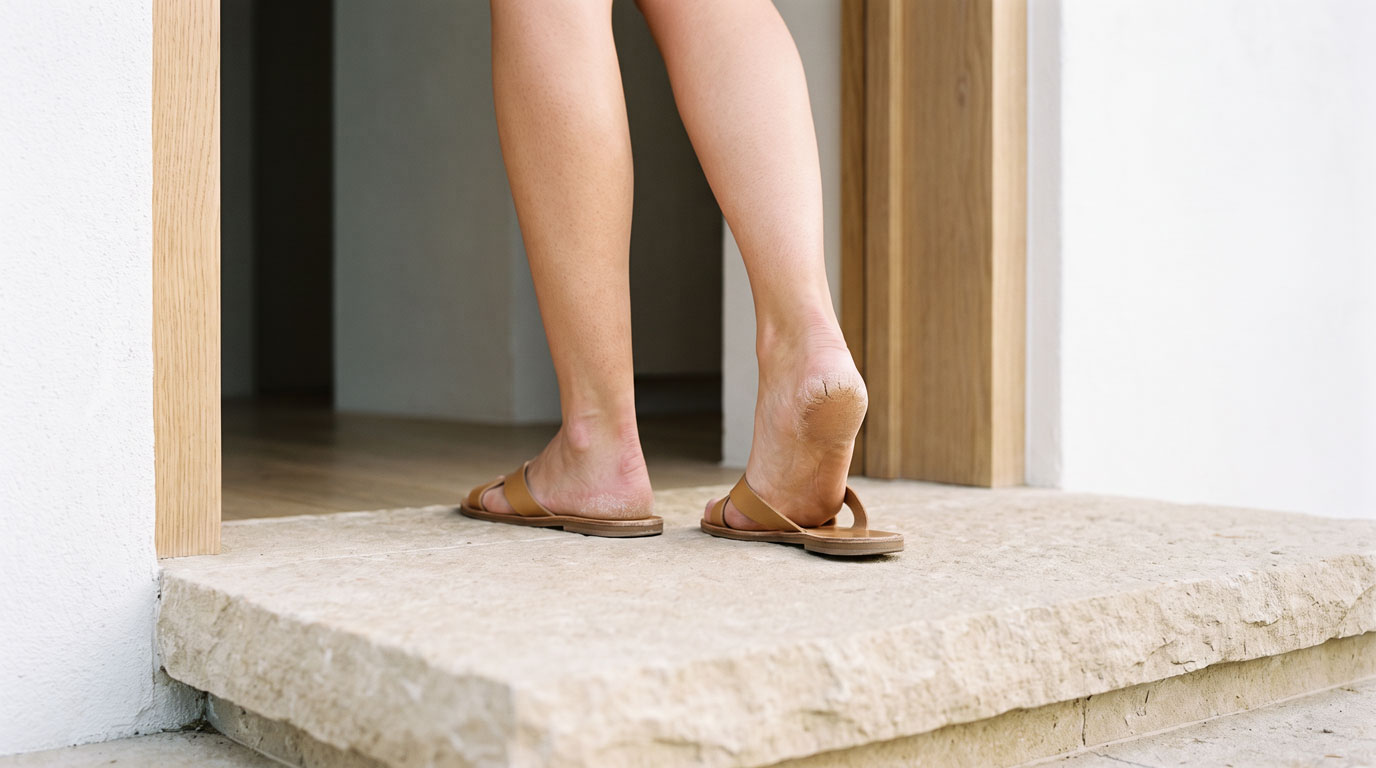
Why cracked heels come back after healing once, and what stops the cycle.

The full picture beyond cream alone — what real treatment requires, step by step.
See the real results
Real cracked heels, healed through consistent care — not a one-time application.
See real results, no filters