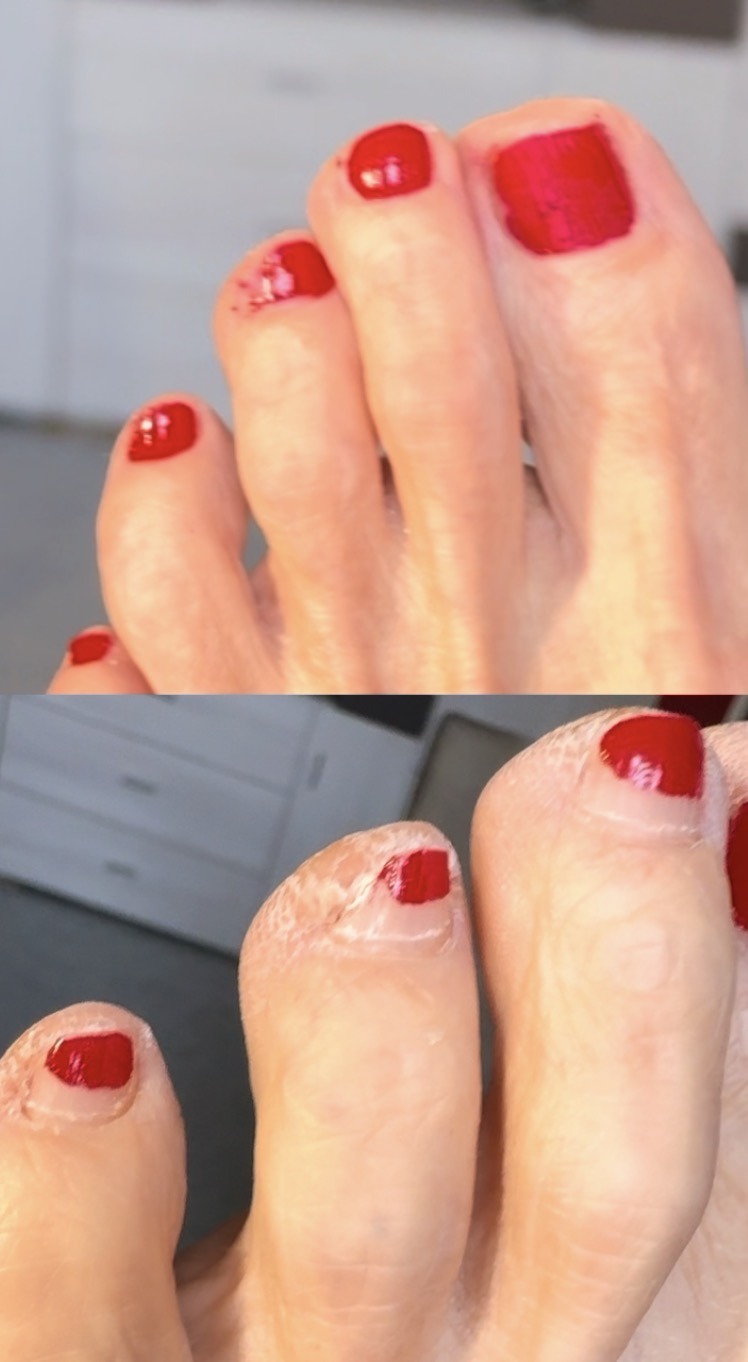
Why most people stop after the first sign of improvement
The moment cracked heels start feeling better, the motivation to keep going drops — which is exactly when the underlying skin is still recovering and most likely to relapse.

Cracked heels treatment
Real cracked-heel treatment is three things done together — removing built-up dead skin, getting moisture in, and keeping it sealed there — not cream applied on its own.
The full picture

Thickened, dead skin has to come off first, since cream applied over it has a much harder surface to actually penetrate.
Moisture needs to reach into the skin, not just sit on the surface — which is why application alone, without anything holding it there, often underperforms.
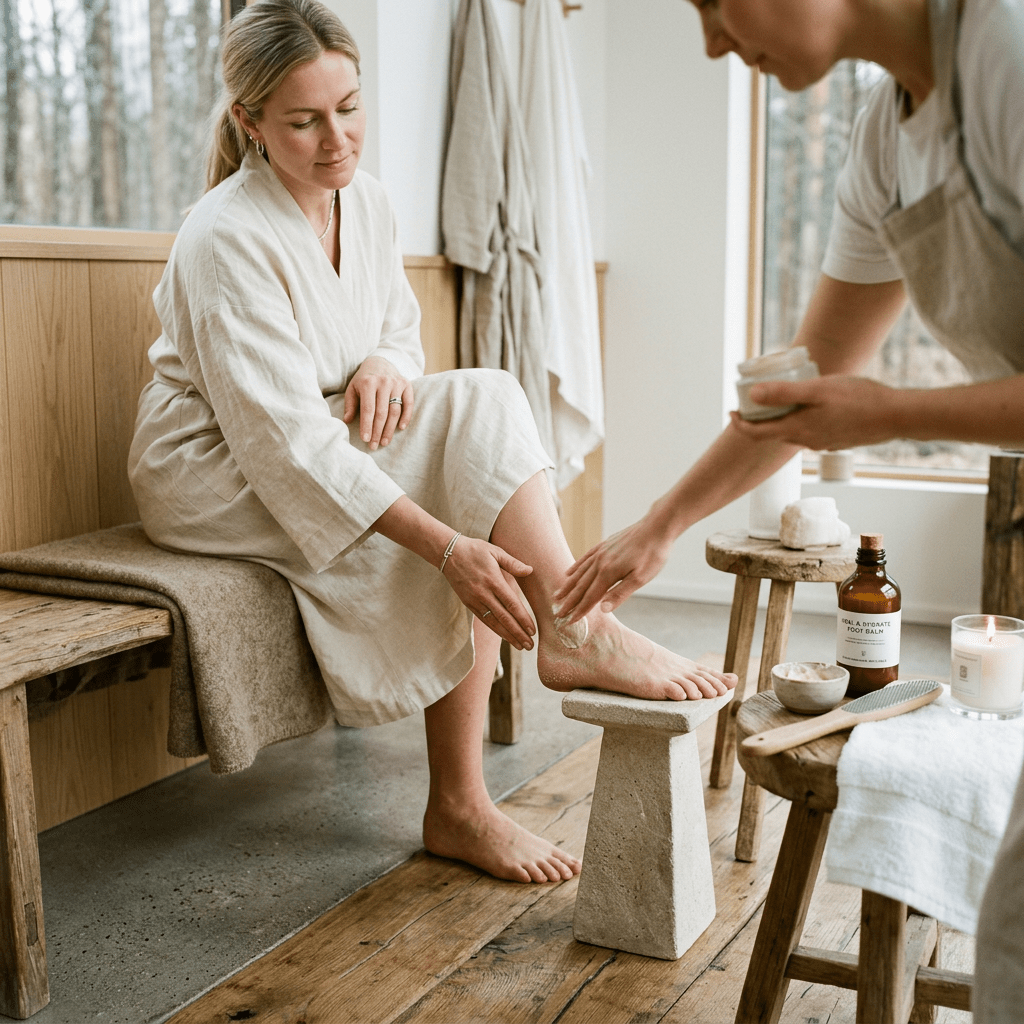
Sealing the cream against skin for a real session is the step most routines skip, and it's usually the single biggest difference between a routine that works and one that doesn't.
When to get help
Sharp pain, visible depth, or a crack that doesn't respond to a week or two of consistent care are signs it's gone past what home treatment alone typically resolves.
Deep, painful cracks — the kind that hurt with every step — are exactly the point where it's worth involving a podiatrist rather than continuing to self-treat.
Bleeding, discharge, or signs of infection change the situation entirely and call for professional care rather than continued home treatment.
Make it finish
Building a treatment routine that actually finishes
The moment cracked heels start feeling better, the motivation to keep going drops — which is exactly when the underlying skin is still recovering and most likely to relapse.
The moment cracked heels start feeling better, the motivation to keep going drops — which is exactly when the underlying skin is still recovering and most likely to relapse.
A single sealed session, done properly, can leave skin visibly softer by the next morning — a clear, early sign that consistent sessions add up over time.
The actual effort is about five minutes — applying cream and sealing it in. The results build from doing that small step consistently, not from turning it into a bigger routine than it needs to be.
Part of a bigger picture
See the real results
Time-stamped before/after results from cracked heels healed through consistent care.
See real results, no filters